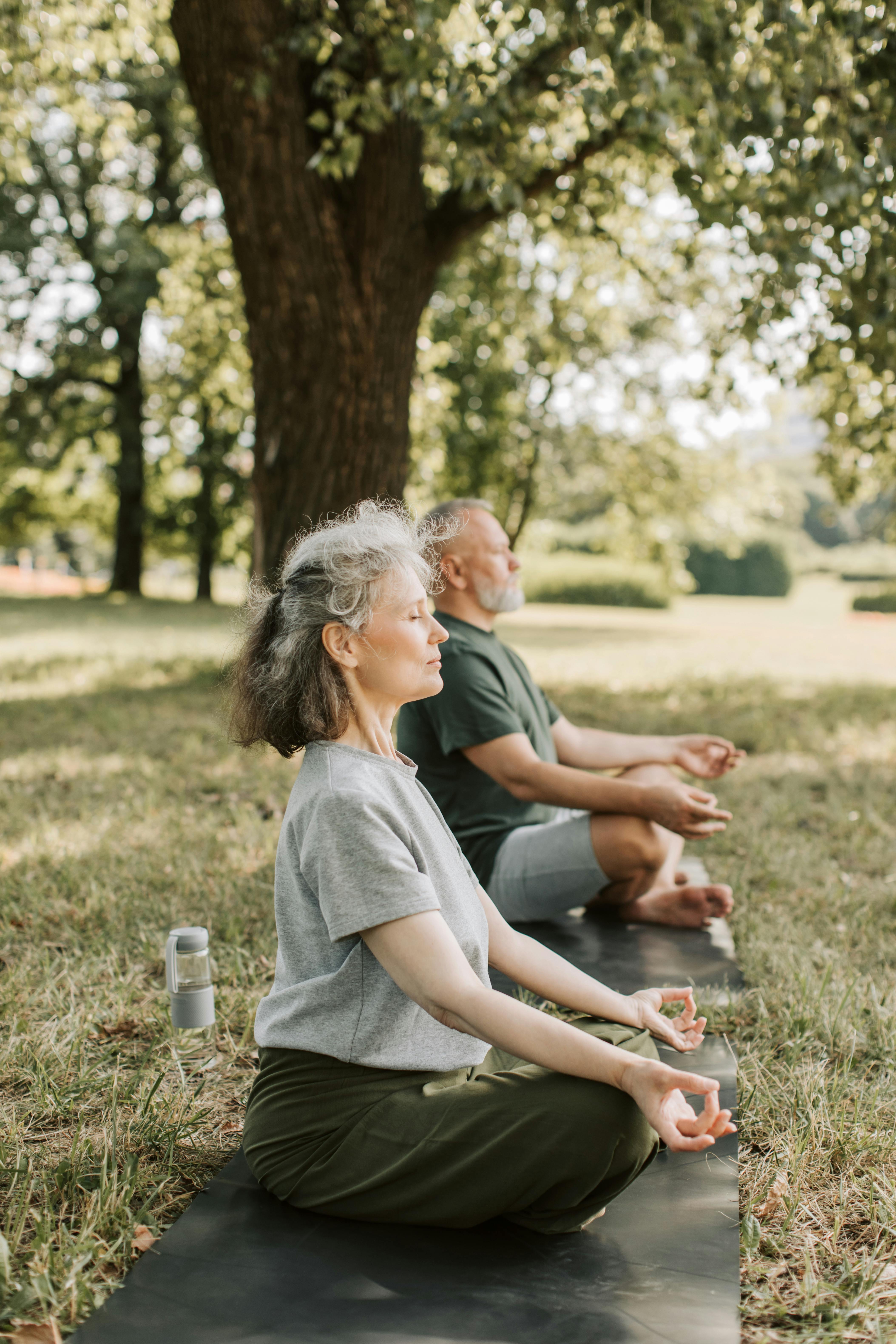
Breathing is the one bodily function that operates both automatically and under your conscious control. This unique quality makes it a powerful bridge between mind and body, and it means you already have everything you need to start improving your health right now. No equipment required, no special setting needed. Just you and your breath.
The following five exercises are drawn from clinical research and time-tested traditions. Each one can be practiced almost anywhere: at your desk, in your car before a meeting, on the train, or in bed before sleep. Start with whichever one resonates most, and build from there.
1. Diaphragmatic Breathing
Also known as "belly breathing," diaphragmatic breathing is the foundation of all respiratory training. Most people default to shallow chest breathing, which uses only the upper portion of the lungs and keeps the body in a mildly stressed state. Diaphragmatic breathing engages the large dome-shaped muscle at the base of your lungs, pulling air deep into the lower lobes where gas exchange is most efficient.
How to Practice
- Sit comfortably or lie on your back with your knees bent. Place one hand on your chest and the other on your belly, just below your ribs.
- Inhale slowly through your nose for a count of four. Focus on directing the air downward so that your belly hand rises while your chest hand stays relatively still.
- Exhale slowly through pursed lips for a count of six, feeling your belly hand fall inward as your diaphragm relaxes.
- Repeat for 5 to 10 minutes, gradually increasing duration as it becomes more natural.
Research shows that diaphragmatic breathing can lower resting heart rate, reduce blood pressure, and decrease cortisol levels after just two weeks of regular practice.
This exercise is ideal for beginners and serves as a warm-up for more advanced techniques. Over time, diaphragmatic breathing should become your default breathing pattern throughout the day.
2. Box Breathing
Box breathing, sometimes called four-square breathing, is a technique used by Navy SEALs, first responders, and elite athletes to maintain calm under pressure. Its power lies in its simplicity and the equal timing of each phase, which brings the autonomic nervous system into balance.
How to Practice
- Inhale slowly through your nose for a count of four.
- Hold your breath for a count of four.
- Exhale slowly through your mouth for a count of four.
- Hold your breath again for a count of four.
- Repeat for four to eight cycles, or until you feel a sense of calm focus.
The key to box breathing is maintaining equal intervals. As you become more comfortable, you can extend each phase to five or six counts. This exercise is particularly effective before high-pressure situations, during moments of anxiety, or any time you need to sharpen your concentration.
3. Pursed-Lip Breathing
Pursed-lip breathing is one of the simplest techniques and is frequently recommended by pulmonologists for people with COPD, emphysema, or asthma. It works by creating gentle back-pressure in the airways, which keeps them open longer during exhalation and helps trapped air escape from the lungs more completely.
How to Practice
- Relax your neck and shoulders. Inhale slowly through your nose for a count of two.
- Pucker your lips as if you are about to whistle or blow out a candle.
- Exhale gently and steadily through your pursed lips for a count of four, making the exhale twice as long as the inhale.
- Repeat for several minutes, or use it whenever you feel short of breath.
Unlike some breathing exercises that are best practiced in dedicated sessions, pursed-lip breathing can and should be used throughout the day whenever you notice shortness of breath. It is especially helpful during physical activity, such as climbing stairs or walking uphill.
Pursed-lip breathing has been shown to improve oxygen saturation and reduce respiratory rate in patients with chronic lung disease, making it a first-line breathing technique in pulmonary rehabilitation programs worldwide.
4. The 4-7-8 Technique
Developed by Dr. Andrew Weil and based on the ancient yogic practice of pranayama, the 4-7-8 technique is often called a "natural tranquilizer for the nervous system." The extended exhale and breath hold activate the parasympathetic nervous system, signaling your body to shift from a stress response into a state of deep relaxation.
How to Practice
- Place the tip of your tongue against the ridge behind your upper front teeth and keep it there throughout the exercise.
- Exhale completely through your mouth, making a whooshing sound.
- Close your mouth and inhale quietly through your nose for a count of four.
- Hold your breath for a count of seven.
- Exhale completely through your mouth with a whooshing sound for a count of eight.
- This completes one cycle. Repeat for three additional cycles, for a total of four breaths.
This technique is especially effective as a pre-sleep ritual. Many people report falling asleep faster and sleeping more deeply after incorporating the 4-7-8 method into their nightly routine. Start with just four cycles and never exceed eight cycles in one session when you are beginning.
5. Alternate Nostril Breathing
Known as Nadi Shodhana in the yogic tradition, alternate nostril breathing is a balancing technique that has been practiced for thousands of years. Modern research confirms that it harmonizes activity between the left and right hemispheres of the brain, reduces blood pressure, and improves cardiovascular function.
How to Practice
- Sit comfortably with your spine straight. Use your right thumb to gently close your right nostril.
- Inhale slowly through your left nostril for a count of four.
- Close your left nostril with your right ring finger so both nostrils are briefly closed. Hold for a count of two.
- Release your right nostril and exhale slowly through it for a count of four.
- Keeping your left nostril closed, inhale through your right nostril for a count of four.
- Close both nostrils, hold for a count of two, then release your left nostril and exhale for a count of four.
- This completes one full cycle. Repeat for five to ten cycles.
Alternate nostril breathing is best practiced in a seated position where you can sit upright. It is an excellent choice for a morning routine or as a transition between tasks during the day. Many practitioners report that it provides a unique combination of calm energy and mental clarity that other techniques do not quite replicate.
Building a Daily Practice
The most important thing about breathing exercises is consistency. Even five minutes a day yields measurable benefits over time. Here are some practical tips for building a sustainable habit:
- Start small: Choose one exercise and practice it for just three to five minutes a day for a week before adding another.
- Anchor it to an existing habit: Practice right after brushing your teeth, during your morning coffee, or before bed.
- Track your progress: Use a device like Zeph to measure your lung function over time. Seeing the data improves motivation and helps you understand which exercises work best for your body.
- Be patient: The nervous system responds to consistent gentle input. Most people notice meaningful changes in stress levels, sleep quality, and breathing ease within two to four weeks.
Your breath is always with you. It costs nothing, requires no equipment, and can be practiced anywhere. These five exercises are not just techniques; they are skills that, once learned, serve you for the rest of your life.